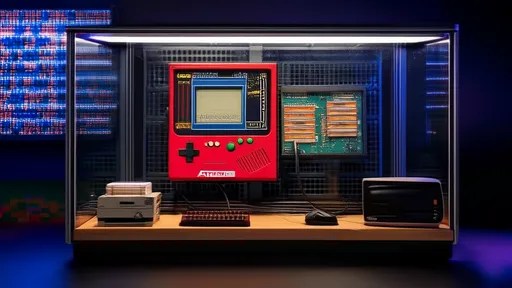
The preservation of arcade ROMs has become a crucial mission for gaming historians, enthusiasts, and archivists worldwide. As the golden age of arcade gaming fades further into the past, the need to safeguard these digital artifacts grows more urgent. Unlike console games, which often see re-releases or remasters, many arcade titles exist solely in their original form, locked away on aging hardware or scattered across private collections. The race against time to document and preserve these games before they vanish entirely has sparked a global movement.
The arcade ROM preservation movement operates in a legal and ethical gray area. While dumping ROMs from owned PCBs is generally accepted within the community, distribution remains contentious. Preservationists argue that most of these games are no longer commercially available, making their archival an act of cultural conservation rather than piracy. Major institutions like the Strong Museum of Play and the Video Game History Foundation have begun recognizing arcade games as important historical artifacts worthy of preservation, lending legitimacy to these efforts.
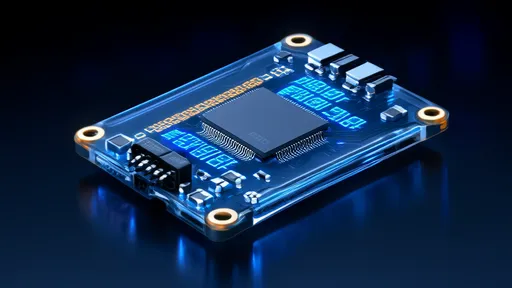
Technical challenges abound in arcade preservation. Unlike console cartridges, arcade PCBs often use custom chips, proprietary hardware, and obscure file formats. Some games employ security measures like suicide batteries that erase data when they die. Preservation teams have developed sophisticated techniques to overcome these obstacles, including custom dumping hardware and software emulation solutions. The MAME project has been instrumental in this regard, serving both as an emulation platform and a comprehensive database of arcade hardware specifications.
Regional variations present another layer of complexity. Many arcade games received different versions for various markets, with changes ranging from minor bug fixes to complete gameplay overhauls. Japanese "Gentei" versions, for instance, often featured easier difficulty settings than their international counterparts. Preservationists strive to document all known variants, creating a complete historical record rather than just preserving the most common iteration of each title.
The community-driven nature of arcade ROM preservation leads to fascinating discoveries. Private collectors sometimes uncover rare prototypes or unreleased games in storage units or abandoned arcades. When the ROMs from these finds are eventually dumped and analyzed, they can rewrite portions of gaming history. Recent years have seen the recovery of lost prototypes like the arcade version of "Nights into Dreams" and early builds of "Street Fighter III," offering invaluable insights into game development processes of the era.
Legal concerns continue to shape preservation efforts. While companies like Capcom and SNK have generally tolerated preservation of their older titles, other rights holders remain hostile. The recent shutdown of certain ROM hosting sites has forced preservationists to develop more decentralized distribution methods. Many now operate through private forums and encrypted channels, sharing verification checksums publicly while distributing the actual ROM files through more discreet means.
Metadata collection has emerged as an equally important aspect of preservation. Simply having the ROM files isn't enough - preservationists meticulously document cabinet artwork, instruction cards, dip switch settings, and even monitor calibration information. Some teams create photogrammetric scans of entire cabinets, while others interview former arcade technicians to record maintenance procedures. This comprehensive approach ensures future generations can experience these games as they were originally intended.
The future of arcade ROM preservation looks toward new technologies. Machine learning assists in reconstructing damaged ROM chips, while blockchain technology helps verify the authenticity of preserved files. Some groups are experimenting with 3D printing replacement parts for arcade cabinets, creating another avenue for historical accuracy. As physical hardware continues to degrade, these digital preservation efforts may become the only way to experience arcade gaming's rich history.
Ultimately, arcade ROM preservation represents more than just saving games - it's about maintaining an important piece of technological and cultural heritage. These preservation efforts allow us to study game design evolution, understand regional gaming trends, and keep alive the communal spirit of arcade culture. While challenges remain, the dedication of the preservation community ensures that future generations will still be able to experience the sights and sounds that defined gaming's arcade era.

By /Aug 7, 2025
By /Aug 7, 2025
By /Aug 7, 2025
By /Aug 7, 2025
By /Aug 7, 2025

By /Aug 7, 2025
By /Aug 7, 2025
By /Aug 7, 2025

By /Aug 7, 2025

By /Aug 7, 2025

By /Aug 7, 2025
By /Aug 7, 2025
By /Aug 7, 2025

By /Aug 7, 2025
By /Aug 7, 2025

By /Aug 7, 2025

By /Aug 7, 2025

By /Aug 7, 2025

By /Aug 7, 2025

By /Aug 7, 2025